
Rubber Flooring vs. Laminate Flooring: What's the Difference?
These days, no matter which house or condo unit we visit in any project, the material developers most often choose for the floor is a wood-grain finish. Wood-grain materials tend to bring beauty and a warm, welcoming feel for residents, while also offering a natural look that pairs wonderfully with the various pieces of furniture in a room.
So what is the difference between wood-grain rubber flooring and laminate wood flooring? Which one is the better choice for your floors? And which is best suited to your home and building?
Today, we'll help you find the answer together.
Rubber Tile vs. Laminate: Which One Is Right for Your Room?
Wood-grain rubber flooring is a floor covering that is steadily growing in popularity, because it costs about the same as laminate wood flooring yet is far more durable, especially when it comes to resisting moisture and termites. The truth is, wood-grain rubber tile is not made from wood at all, but from rubber or PVC polymer, with fiber layers arranged in layers for strength and to keep the rubber tile from shrinking. It is manufactured using modern innovation that meets European standards, allowing rubber tile to be produced in a wide variety of patterns and colors that closely resemble wood, so it can be laid to deliver the beauty and warmth of wood seamlessly.
Laminate wood flooring, on the other hand, is made from wood powder or wood dust derived from hardwood, processed through compression or fine grinding and blended with various chemicals such as melamine and moisture-protection agents to make the material more effective and durable. The result is a strong wooden board well suited to be used as the core layer and bottom layer of laminate wood flooring.
The Differences Between These Two Types of Flooring
1. Material Properties
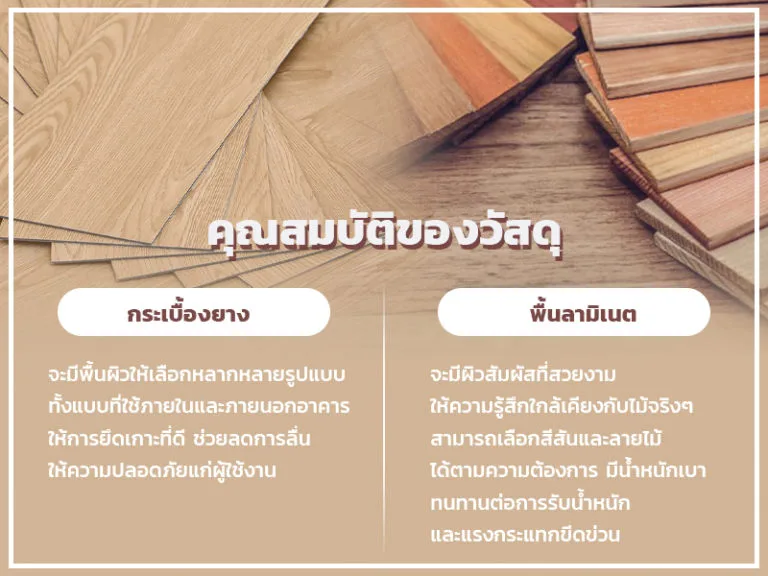
Rubber Tile : comes in a wide range of surface finishes for both indoor and outdoor use. It offers good grip that helps reduce slipping and keeps users safe, and it stands up well to the weather and the environment wherever it is installed, because the material is durable, tough, and holds its shape well. It can withstand moisture, putting an end to the nuisance of termites, and it is also easy to clean, quick to install, and dust-free. Some types of rubber tile can even be installed yourself, without waiting for an installer.
The downside of rubber tile is that it scratches easily, is not resistant to acids and alkalis, and the rubber floor may expand and contract if the wood-grain rubber tile you use does not meet international standards.
Laminate Flooring : has a beautiful surface texture that feels very close to real wood. You can choose the colors and wood grains you want, it is lightweight, and it is durable against weight, impact, and scratches. It can be installed or replaced in specific spots without tearing out the entire floor when a single board is damaged. On top of that, it can be laid directly over ceramic tile floors, saving you the time of tearing them out.
The downside of laminate flooring is that it is not resistant to water and moisture, is at risk of being eaten by termites, scratches easily from sharp objects, and is not resistant to chemicals such as soapy water and various cleaning detergents.
2. Applications
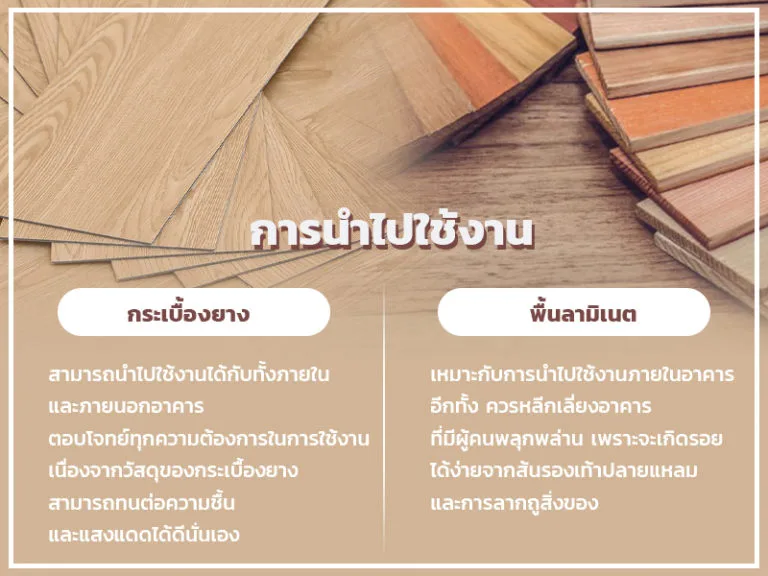
Rubber Tile : can be used both indoors and outdoors, meeting every usage need, because the rubber tile material withstands both moisture and sunlight well.
Laminate Flooring : is suitable for indoor use only. It is also best to avoid high-traffic buildings, since it scratches easily from pointed heels and from dragging objects across it.
3. Installation
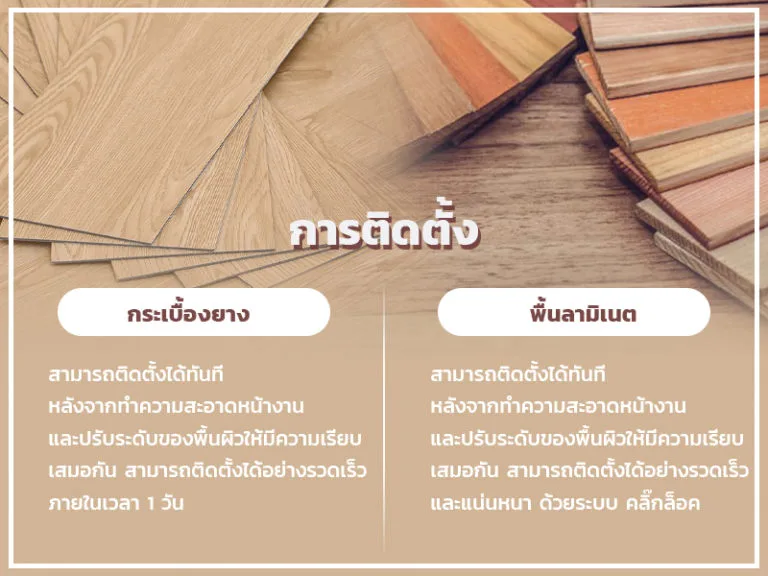
Rubber Tile : can be installed immediately after the site has been cleaned and the surface leveled to be smooth and even. It can be installed quickly within a single day, and you can install it yourself by gluing it to the surface below.
Laminate Flooring : can be installed immediately after the site has been cleaned and the surface leveled to be smooth and even. It can be installed quickly and securely using a click-lock system.
4. Maintenance
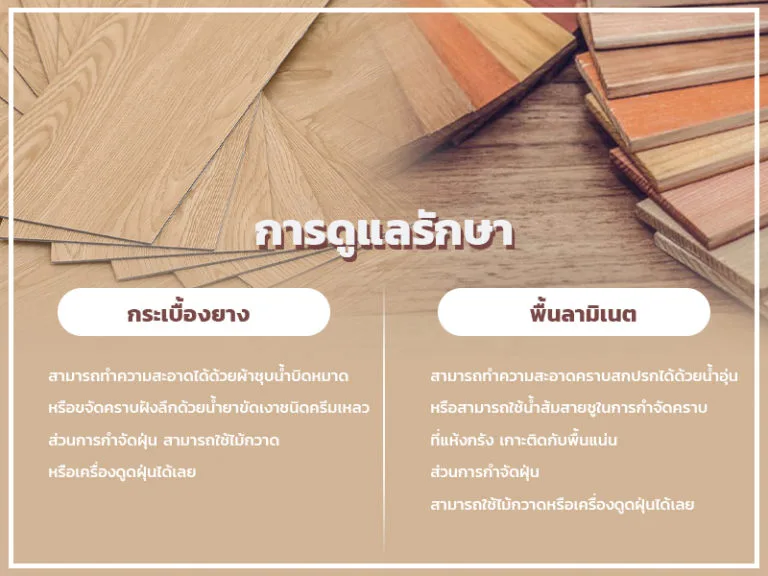
Rubber Tile : can be cleaned with a damp, wrung-out cloth, or you can remove deeply embedded stains with a liquid cream polish. To get rid of dust, simply use a broom or a vacuum cleaner.
Laminate Flooring : can have dirt and stains cleaned off with warm water, or you can use vinegar to remove dried, caked-on stains that cling stubbornly to the floor. To get rid of dust, simply use a broom or a vacuum cleaner.
5. Price and Lifespan
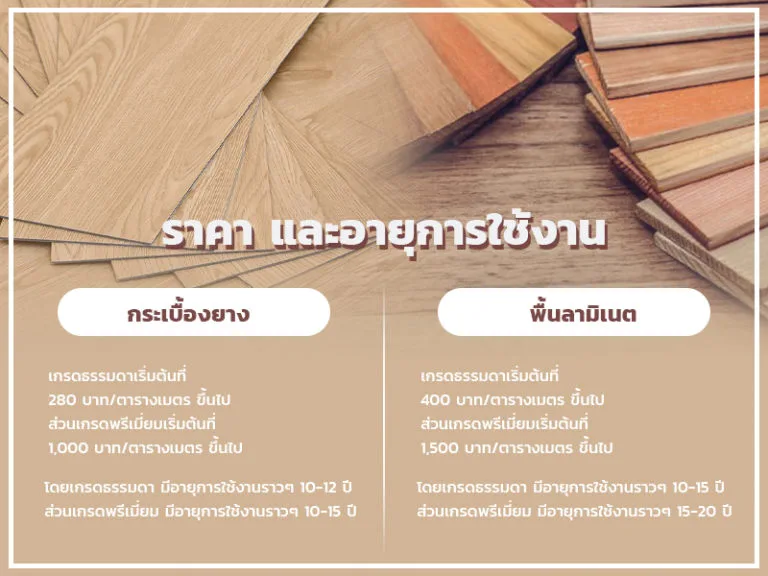
Rubber Tile : as for the market price of rubber tile, the standard grade starts from 280 baht per square meter and up, while the premium grade starts from 1,000 baht per square meter and up.
The standard grade has a lifespan of roughly 10-12 years.
The premium grade has a lifespan of roughly 10-15 years.
Laminate Flooring : as for the market price of laminate flooring, the standard grade starts from 400 baht per box and up, while the premium grade starts from 1,500 baht per box and up.
The standard grade has a lifespan of roughly 10-15 years.
The premium grade has a lifespan of roughly 15-20 years.
As you can see, these two types of flooring have many similarities and differences, each with its own advantages and disadvantages. Choosing the right flooring for your room should therefore take into account how it will be used, the environment, and other factors to help you make your decision, so that your floor looks beautiful, suits its intended use, and noticeably reduces various nuisances, thanks to the properties of these two types of flooring.
With thanks for the great information from: https://www.wazzadu.com/article/3158